
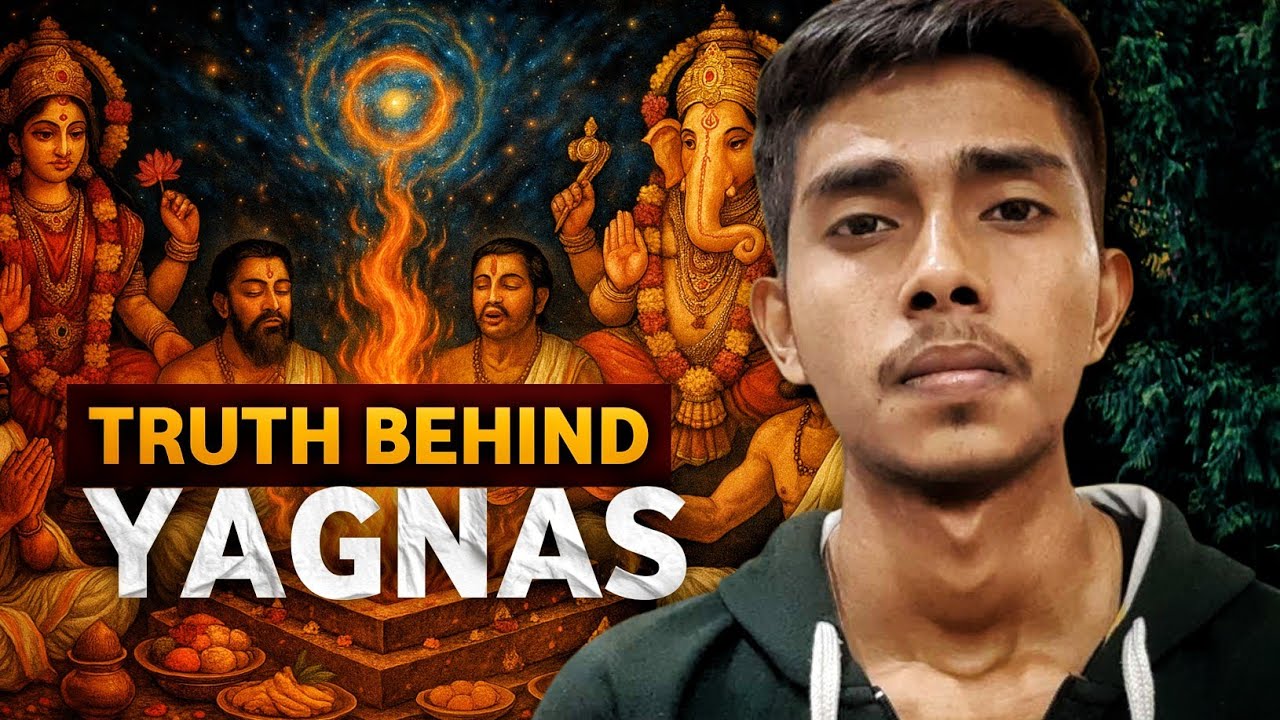
Types of Yagnas – Meaning, Purpose & Modern Relevance in Vedic Tradition
Harsh Tattva
November 22, 2025
1
views
Types of Yagnas – Meaning, Purpose & Modern Relevance
In Vedic tradition, a Yagna (यज्ञ) is more than just a ritual fire ceremony — it is a powerful act of transformation, offering, and alignment with cosmic forces. In this comprehensive exploration, we dive deep into the many types of Yagnas, their purposes, how they were practiced in ancient times, and what they mean for seekers and practitioners in the modern world.
Watch the complete explanation of Yagnas and their transformative power in Vedic spirituality above.
1. What Is a Yagna?
At its root, the term Yagna comes from the Sanskrit "yaj" (यज्) meaning to worship, to offer, and to sacrifice. However, sacrifice here does not mean violence — it means selfless offering and alignment with divine forces.
Traditional Vedic texts describe Yagna as:
- An act of selfless offering — not just to fire, but to the divine forces and the universal order
- A ritual of transformation — where material elements are transmuted into spiritual energy
- A cosmic communion — where the individual consciousness aligns with universal consciousness
- A community ritual — that binds people together in shared spiritual purpose
The ritual of Yagna historically served multiple purposes: maintaining natural order (rita), community bonding, spiritual purification, healing, prosperity, and cosmic balance.
2. Major Types of Yagnas & Their Profound Significance
The Vedic tradition describes numerous types of Yagnas, each with unique purposes and procedures. Here are the main categories:
Agnayan / Yajna for Agni (अग्नियन)
The most basic and fundamental Yagna. It involves offerings of ghee, grains, and herbs into the sacred fire.
- Purpose: Honoring Agni (the fire god) as the divine mediator between humans and the cosmic forces
- Significance: Fire is the purifier and transformer — this Yagna represents the burning away of impurities
- Modern Practice: Can be performed daily through a simple home ritual with controlled fire
Somayajna (सोमयज्ञ)
One of the most sacred and elaborate Yagnas in Vedic practice, involving the ritualistic use of soma (a sacred plant extract).
- Purpose: Elevation of consciousness and connection to divine bliss (ananda)
- Duration: Typically performed over multiple days with complex ritual procedures
- Significance: Associated with the moon (soma), vitality, immortality, and transcendence
- Benefits: Said to enhance mental clarity, spiritual insight, and cosmic awareness
Rajasuya Yajna (राजसूय)
The royal consecration ritual performed by ancient kings to establish sovereignty and divine right to rule.
- Purpose: To consecrate a ruler and invoke divine blessings for just governance
- Symbolism: Represented the king's spiritual and material authority over the kingdom
- Cosmic Significance: Aligned the kingdom with universal cosmic order and dharma (righteousness)
- Elaborate Nature: Required the participation of priests, nobles, and the community
Ashvamedha (अश्वमेध) – The Horse Sacrifice
One of the most famous and elaborate Yagnas in Hindu mythology and history.
- Surface Meaning: The ritual release of a sacred horse symbolizing the king's power and sovereignty
- Deeper Meaning: NOT a violent act, but rather the freeing of energy, the breaking of boundaries, and the expansion of consciousness
- Cosmic Symbolism: The horse represents freedom, speed, vitality, and the cosmic energy that moves through creation
- Purpose: To establish universal dominion, restore cosmic order (rita), and bless the kingdom with prosperity
- Famous Historical Example: Performed by great kings like Ikshvaku and Emperor Ashoka
Vajapeya (वाजपेय)
A prestigious ritual involving dairy products, soma, and extensive offerings.
- Purpose: To invoke prosperity, victory, and spiritual achievement
- Significance: Literally means the drink of strength — energizes both physical and spiritual power
- Community Impact: A grand celebration involving feasting and communal participation
- Benefits: Said to enhance vitality, success, and divine favor
Darshapurnamasa Yajna (दर्शपूर्णमास)
Monthly and fortnightly domestic offerings performed by householders.
- Purpose: To align the individual with cosmic rhythms and lunar cycles
- Frequency: Performed on new moon (Darsha) and full moon (Purnama) days
- Accessibility: Designed for ordinary householders to participate in daily spiritual practice
- Benefits: Maintains spiritual discipline and connection to cosmic rhythms throughout the year
Shraddha & Pind Daan (श्राद्ध और पिंड दान)
Rituals honoring ancestors and maintaining lineage spiritual connection.
- Purpose: To honor the departed, facilitate their journey in the afterlife, and strengthen familial bonds across generations
- Significance: Recognizes the continuity of consciousness and karma through family lines
- Practice: Involves offering food (pind) to ancestors, creating a bridge between living and departed souls
- Spiritual Principle: Demonstrates that death is not an ending but a transformation in consciousness
3. Why Are Yagnas Important, Even Today?
Spiritual Purification
Yagna symbolizes the burning away of ego, ignorance, and attachment. The fire becomes a tool for inner transformation and the release of karmic patterns.
Community & Environmental Consciousness
Many Yagnas were communal, eco-centric practices that fostered environmental respect, animal welfare, and communal harmony — values urgently needed today.
Integration of Ritual & Science
Modern researchers in Vastu shastra, sound therapy, and consciousness studies are discovering that the fire, chanting, and oblations of Yagna create measurable vibrations and electromagnetic effects that promote healing and wellbeing.
Personal Spiritual Alignment
In our noisy, disconnected world, even a simple domestic Yagna — lighting a ghee lamp, offering a mantra, setting an intention — helps align the individual consciousness with the larger rhythms of cosmic life.
Psychological Transformation
The ritual structure of Yagna provides a container for psychological integration, emotional release, and conscious intention-setting.
4. How to Engage With Yagna Meaningfully in Modern Times
If you wish to practice or deepen your understanding of Yagna, here are practical approaches:
Start With a Simple Fire Offering
Begin with a basic domestic Yagna using a deep bowl or fire-safe container, pure ghee, and a simple chant or mantra. Treat it as a sacred moment of intention and offering.
Clarify Your Intention
Before any Yagna, know your purpose clearly. Are you seeking purification? Healing? Prosperity? Spiritual elevation? A clear intention amplifies the ritual's power.
Embrace the Communal Spirit
Whenever possible, invite family or friends to participate. Yagna is most powerful when performed with others, creating a field of collective consciousness.
Respect the Elements
Treat fire, water, earth, and air with reverence. Use organic materials, avoid synthetic substances, and honor the natural world in your offerings.
Understand the Historical & Ethical Context
Many Yagnas evolved over millennia. Some ancient practices (like certain animal sacrifices) are outdated or ethically problematic by modern standards. Study, understand, and adapt practices with wisdom and ethics.
Combine With Meditation
Use the Yagna as a focal point for meditation. Watch the fire, listen to the chants, and allow your consciousness to merge with the cosmic energy being invoked.
5. HarshTattva's Perspective on Yagnas
At HarshTattva, we view Yagna not as ancient superstition but as a sophisticated technology of consciousness transformation:
The fire is our own heart. The oblation is our intention. The chanting is our alignment with cosmic vibration. The act of offering is the act of surrender and transformation.
By understanding the deeper layers of Yagna — beyond the external form — we rediscover these sacred practices in a way that is both deeply traditional and profoundly modern.
Yagnas teach us that:
- Spirituality is not passive — it is active, dynamic, and participatory
- Individual consciousness can align with and influence cosmic forces
- Community and ritual create containers for transformation
- Ancient wisdom and modern science are converging toward the same truths
- Offering and surrender are the pathways to liberation
6. Final Thoughts: The Living Spirit of Yagna
The various types of Yagnas reveal that Vedic spirituality is not passive acceptance but active co-creation with the divine. Whether you perform a grand Rajasuya or simply light a lamp with a pure intention, the spirit remains eternally the same:
Surrender. Offering. Alignment. Transformation.
Use this knowledge to bring meaning, purpose, and sacred connection into your life. May the eternal spirit of Yagna awaken the divine fire within your heart.
Watch the video above for a cinematic exploration of these transformative practices, and may the wisdom of Yagna illuminate your spiritual path.